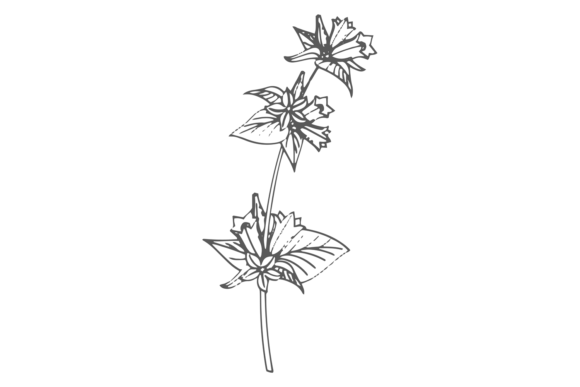
Floral Sketch: The Art and Practical Power of Botanical Illustration
There is something quietly enduring about a botanical illustration. Long before photography could capture every vein on a petal, naturalists and artists were painstakingly documenting the plant world with ink, watercolour, and pencil. Today, the floral sketch has moved far beyond the archive drawer. It has become a visual anchor for wellness brands, a teaching tool in online courses, a design element in mindful digital products, and a versatile commercial asset that bridges tradition with contemporary digital workflows. Understanding what makes botanical illustration of healing herbs, in particular, so relevant right now means looking at how we create, consume, and reuse visual content in a world that increasingly values authenticity and clarity.
The Quiet Renaissance of Floral Sketch in a Digital-First Economy
We live in an age of overwhelming image saturation. Stock photography is often generic, over-polished, and immediately forgettable. In response, a growing number of creative professionals, marketers, and business owners are turning toward more human, textured, and historically rooted visual styles. A floral sketch fits perfectly into this shift. It carries a sense of care and intention. When you look at a line drawing of chamomile or lavender, you perceive the artist’s hand—the slight irregularity of a stem, the deliberate cross-hatching of a leaf—and that perception builds trust. This is not a sterile, manufactured image. It feels borrowed from a naturalist’s field journal, and that feeling resonates with audiences searching for calm, authenticity, and a connection to the earth.
This resurgence is not solely about nostalgia. It is deeply practical. A sketch isolated on a clean white background provides maximum versatility. It strips away visual noise and allows the plant to function as both information and decoration. Whether it is used in an email header, a product label, a meditation app interface, or an educational diagram, the clear silhouette and fine detail make the subject instantly recognizable without overwhelming the surrounding design. The rise of minimalism in digital design, paired with a growing interest in herbalism and natural wellness, has created the perfect ecosystem for botanical sketches to thrive as sought-after creative resources.
Why Healing Herbs Take Center Stage in Botanical Illustration
Healing herbs carry a dense layer of cultural and practical meaning. Plants like calendula, echinacea, peppermint, and rosemary have been documented for centuries not just for their medicinal properties, but for their beauty. A botanical illustration of healing herb plant isolated on white background EPS, JPG, SVG, transparent PNG does more than show a pretty picture. It communicates knowledge. It tells a viewer that this plant matters—it has been selected out of the visual noise to be studied, identified, and respected. For brands selling herbal teas, natural skincare, or supplements, this implicit message is incredibly powerful. The sketch elevates a product story from simple wellness claim to a narrative rooted in herbal tradition and botanical accuracy.
The isolated presentation on a white background serves a very specific purpose. It makes the herb the undisputed hero of the image. There is no competing foliage, no distracting shadow, no contextual landscape. This purity of focus is what lets the image move seamlessly across different media: printed on a fabric tote, overlaid on a journal cover, or used as an icon in an ingredient glossary. The subject is lifted from nature and offered to the user as a ready-to-use visual building block. And because the subject is a healing herb, it also carries subtle connotations of care, research, and natural efficacy—qualities that are especially attractive in the current market.
From Herbal Records to Multi-Format Digital Assets
The evolution from hand-drawn medicinal plant catalogues to today’s digital vector files has been remarkable, but the core purpose remains surprisingly consistent: documentation and communication. An 18th-century apothecary illustration was created to help physicians and herbalists accurately identify plants for remedies. A modern floral sketch of the same herb, delivered as an SVG or layered EPS, might now serve a product designer designing a wellness app, a teacher building a botany curriculum, or a blogger illustrating a recipe for elderberry syrup. The context has exploded, but the need for clear, botanically faithful imagery has not changed.
What has changed is the expectation of format flexibility. Designers no longer live in a single-medium world. A project that starts as a printed herbal guide may later need to become an interactive website, an animated social post, or a large-format poster. This is why the bundle of EPS, JPG, SVG, and transparent PNG has become the preferred delivery package for botanical art. EPS and SVG offer scalability for print and responsive screen design without loss of quality. JPG provides a familiar, easily shared raster option. A transparent PNG gives content creators the freedom to drop the herb sketch directly onto a coloured background, a photograph, or a textured canvas without any white box surrounding it. This combination is not accidental—it is a direct response to the multi-channel reality of modern creative work.
Practical Implications for Creators, Educators, and Businesses
For the independent studio owner or freelance graphic designer, having access to high-quality botanical sketches eliminates the steep cost and time required to commission original scientific illustrations from scratch. A well-drawn, accurately proportioned illustration of lemon balm or valerian can be reconfigured endlessly: recoloured to match a brand palette, combined with typography for a logo lockup, or printed on packaging. The consistency of having an entire set of herbs rendered in the same sketch style also creates a cohesive visual language that strengthens brand identity. It becomes a signature, signalling calm expertise and attention to detail.
Educators and content creators find equal value. A botanical illustration of St. John’s Wort or passionflower can anchor a lesson plan, a downloadable PDF guide, or a social media carousel explaining nervine herbs. The ability to use a transparent PNG instantly on a pastel background or within a diagram avoids the clunky look of a rectangular image with a white block. This alone saves hours of editing and yields a more professional final product. Similarly, marketers in the wellness and slow living spaces lean heavily on these assets for newsletters, memberships, and digital products that require a soft, editorial aesthetic without appearing overly corporate.
Decoding File Formats for Floral Sketch Assets
Understanding when to use each file type from a botanical illustration bundle prevents frustration and upscales work. An EPS (Encapsulated PostScript) file is the go-to for high-resolution print projects. A skilled designer can open it in Adobe Illustrator and edit individual lines, change stroke weights, or extract a single element from a composition. It retains sharpness at any size, making it ideal for packaging, signage, or apparel. SVG (Scalable Vector Graphics) serves a similar purpose for digital screen use. It can be animated, styled with CSS, and inserted directly into website code without losing fidelity. For web designers building interactive plant finders or animated headers, SVG is indispensable.
JPG remains the universal fallback for quick placement in presentations, blog posts, and social media drafts. It is flat, rasterized, and easy to handle, though it lacks transparency. That is where the transparent PNG becomes crucial. When a botanical sketch of a healing herb like arnica or chamomile is needed to sit gracefully over a photograph, a textured paper background, or a coloured card in a mobile app, the PNG format keeps the edges crisp and the white area invisible. This small technical distinction dramatically expands the usability of the image and is often the primary reason professionals seek out isolated illustrations in the first place.
Integrating Isolated Herbal Art into Cohesive Visual Systems
Relying on scattered clip art rarely leads to a polished outcome. A curated set of floral sketches, however, can form the visual backbone of a project. A small soap maker, for example, might use the same transparent PNG of calendula on every product page, in their ingredient descriptions, as a repeating pattern on tissue paper, and within an email signature. The isolated nature of the sketch makes repetition feel intentional rather than cluttered. An online herbalist could build an entire course identity around five or six carefully chosen botanical illustrations, using the SVG versions for slide decks and the JPG versions for printable worksheets.
This approach also supports brand storytelling. A line of supplements built around adaptogenic herbs might feature ashwagandha, rhodiola, and holy basil all illustrated in a uniform style. A wellness retreat could weave these same sketches into signage, menus, and guided journal pages. Because the sketches are isolated, they can be layered on photography, combined with soft organic shapes, or kept minimal on stark white space to evoke a clinical, almost museum-quality aesthetic. The versatility removes creative friction and allows small teams to execute a strong visual direction without needing an in-house scientific illustrator.
Finding and Using High-Quality Botanical Illustrations Responsibly
Not all stock floral illustrations are created equal. Many are rushed, botanically inaccurate, or overly simplified. Seek out assets that show clear attention to the plant’s morphology: leaf arrangement, flower structure, and stem characteristics should be recognizable. A floral sketch of peppermint should look distinctly like peppermint, not a generic leafy sprig. The best commercial botanical illustrations are often created by artists with a background in natural science illustration or herbalism, and their work tends to carry a higher level of precision and thoughtfulness. This authenticity directly benefits anyone using the image for educational, commercial, or health-related purposes, where credibility matters.
When evaluating a download that includes EPS, JPG, SVG, and transparent PNG versions of healing herb illustrations, look beyond the preview. Open the vector file to confirm that strokes are clean and layers are well organized. Check the PNG at full transparency to ensure no white halo remains around the edges. These quality markers save time later and ensure the assets integrate smoothly into demanding workflows. It is also sensible to verify licensing terms. Many botanical illustration bundles allow unlimited commercial use, which is a significant practical advantage for agencies, product developers, and publishers who need legal clarity across multiple projects.
A Lasting Tool for a Visual World That Craves Meaning
The demand for botanical illustration shows no sign of fading. As artificial intelligence generates more and more imagery, the deliberately hand-drawn, the historically informed, and the botanically accurate become points of differentiation. A botanical illustration of healing herb plant isolated on white background EPS, JPG, SVG, transparent PNG is not just a file to be purchased and used. It is a carefully prepared asset that bridges old-world observation skills with modern design requirements. It serves the herbalist’s blog, the beauty brand’s launch campaign, the teacher’s classroom, and the app developer’s interface with the same quiet utility.
Investing in a solid set of floral sketches means investing in a flexible visual vocabulary. The ability to pull a lavender sketch for a candle label, a dandelion root illustration for a supplement brochure, and a chamomile flower for a sleep story thumbnail builds a thread of organic consistency that audiences notice on a subconscious level. This attention to detail is what separates rushed design from intentional communication. In an economy that rewards authenticity, clarity, and versatility, the humble botanical sketch has become an unexpectedly powerful tool—and it is ready to be used.