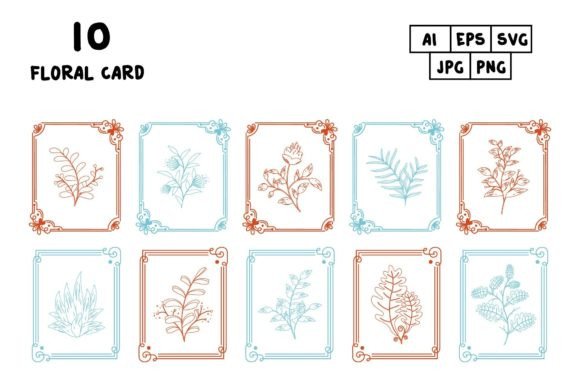
Floral Card: Versatile Design for Shirts, Apparel, and More
When you search for a design that can move effortlessly between a custom t-shirt, a framed poster, a laptop sticker, and a canvas tote bag, you encounter a specific kind of digital asset. Often described as a Floral Card design, this offering is built for people who need consistency across physical items without redrawing or reformatting from scratch. It blends artistic floral motifs with a ready-to-apply layout, and it arrives in a bundle of file types that cover home printing, professional print shops, screen printing, and vinyl cutting. Understanding what makes this design distinct, where it excels, and where you may want to look for an alternative helps you use it effectively without overpaying for capabilities you may not need.
What Defines the Floral Card Design and Its Multi-Use Potential
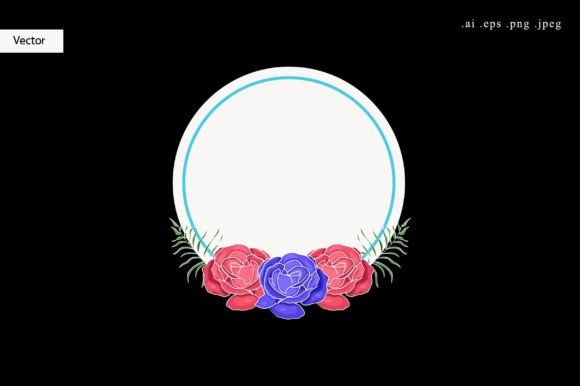
A Floral Card is more than a single image. It is typically a carefully composed arrangement of botanical elements, soft color palettes or bold contrasts, and a card-like framing device. The design might feature a central bouquet, delicate wildflowers bordering an empty space for text, or a vintage-inspired botanical illustration set inside an ornate frame. The word “card” in the name often hints at its original purpose: it works wonderfully for greeting cards, thank-you notes, or invitations. But the value lies in how easily it translates to other creative projects.
The defining characteristic is the all-in-one format package. Most sellers provide the design at 1920px by 1280px canvas size, which gives a generous 3:2 aspect ratio. That proportion adapts well to horizontal surfaces, be it a poster, a shirt chest print, or a tote bag panel. The inclusion of AI, SVG, transparent PNG, JPG, and EPS files addresses different production paths. An AI file lets you edit individual petals and lines in Adobe Illustrator. An SVG keeps the design scalable for Cricut or Silhouette machines. A transparent PNG offers drag-and-drop ease for digital mockups, while a high-resolution JPG gives you a ready-to-print file for many print-on-demand platforms. This layered flexibility reduces the need to buy multiple designs for different applications.
Comparing File Formats and Their Real-World Impact
Not every design bundle includes both vector and raster formats with transparency support. With a Floral Card, the mix matters more than the number of files. A shirt print shop, for instance, may insist on a vector EPS so colors separate cleanly for screen printing. A sticker manufacturer that uses a Roland or Graphtec cutter depends on layered SVG artwork with cut lines. And if you simply want to upload the design to a direct-to-garment printer’s website, a 1920px JPG might be the only thing you need. Here is how the typical formats compare in practice:
- AI and EPS (vector): Infinitely scalable without quality loss. Best for professional printing, resizing for large banners, and editing individual design elements. If the text or decorative frames need tweaking, these are essential.
- SVG (vector): Compatible with hobbyist cutting machines and many design apps. Great for heat transfer vinyl on tote bags or layered paper cards. Some SVG files include separated layers by color, which simplifies multi-color vinyl application.
- Transparent PNG (raster): Maintains a clear background, so the floral design sits cleanly on any product color. Ideal for mockups, sublimation previews, and use in Canva or Photoshop. The fixed 1920px width is sufficient for medium-sized prints, though extreme upscaling may show limits.
- JPG (raster): A flattened, easy-to-handle format at the same canvas dimensions. Often the most accessible for online printing services. However, the solid background can clash with colored garments unless the print area is rectangular and intentional.
Deciding which format you truly rely on helps you avoid paying for a bundle where half the files go unused. Yet the broad compatibility also future-proofs your purchase. If you start with digital cards but later launch a small clothing line, the vector files are already there.
When a Floral Card Design Works Best Across Different Products
The strongest use-case scenario involves someone building a cohesive product collection. A designer selling merchandise at markets or online might use the same Floral Card motif on a unisex t-shirt (centered chest print), a set of enamel-mug wrapping prints, a wall art piece, and thank-you cards included with orders. Because the design retains its card-like structure, it gives the entire product line a signature look without extra design labor. The 1920x1280px canvas, when sized proportionally, fits well on phone cases, notebooks, and tote bags that favor horizontal artwork.
Small-batch production also benefits. A craft teacher running a hand-printing workshop can provide the SVG file so students cut stencils, while the organizer uses the same JPG for flyers and social media. The consistency reduces the visual noise that comes from mismatched clip art.
Another good fit is when you want a design that already feels “finished.” Many floral card layouts include decorative borders or a composition that anchors the artwork, so you are not left struggling to make a lonely flower bunch look intentional on a garment. The card framing can be a design feature, not a limitation. On a tote bag, the border becomes part of the geometry, and on a poster, it can resemble a vintage botanical print.
Situations Where Another Design Approach Might Be a Better Fit
The very structure that makes a Floral Card cohesive can also be a constraint. If you need the artwork to wrap around the sides of an all-over print hoodie or a pair of leggings, the fixed rectangular canvas and border concept may look awkward when stretched or cut off. Seamless repeating patterns or all-over placement prints often serve better for such apparel. Similarly, if you require a vertical orientation for a wall calendar, a portrait-style poster, or a tall narrow tote, the 3:2 aspect ratio may force uncomfortable cropping. A design offered in multiple canvas size ratios or in a format that leaves more breathing room for re-composition might solve that issue with less manual editing.
There is also the matter of exclusivity. A widely sold digital file can appear on dozens of products across different seller shops. If brand differentiation is critical, a semi-custom or licensed exclusive version—where you commission an artist to adapt a floral card concept to your color palette and foliage choices—might justify the extra cost. The off-the-shelf Floral Card remains practical and affordable, but it rarely offers unique ownership.
Additionally, people working with very large format printing, such as large banners or billboard-sized graphics, need to examine the raster limits. While vector formats handle scaling infinitely, any linked raster textures or effects embedded in the AI/EPS may not survive extreme enlargement cleanly. A 1920px PNG upscaled to a 24-inch wide poster at 300 DPI begins to show softness. Knowledge of resolution requirements is important before sending files to press.
Practical Considerations for Shirts, Tote Bags, and Wall Art
When applying the design to shirts, fabric color drastically changes the result. The transparent PNG allows you to preview the floral card on dark heather or pastel backgrounds, but the ink opacity, especially with direct-to-garment printing, can cause lighter flower colors to fade into a white base layer. Testing on a sample shirt often reveals whether the design needs a slight white underbase adjustment. Vector files give print shops more control over that variable. For vinyl heat transfers, the SVG file remains the most practical, particularly if the design includes delicate leaf outlines that need clean weeding lines.
On tote bags, the placement area is usually a wide rectangle. The 1920x1280px canvas directly matches that shape, making it one of the most hassle-free products for this design. However, consider the bag’s material. Canvas absorbs ink differently than polyester. A soft floral watercolor effect might look muted on coarse cotton, so a bolder variant of the floral card or a vector file you can recolor may produce a crisper result. Many users find that the AI or EPS file gives them the flexibility to adjust color saturation for fabric-specific outcomes.
For posters and wall art, frame-ready proportions matter. The 3:2 ratio aligns with common print sizes like 18x12, 24x16, or 30x20 inches. A high-quality print can bring out the detail in the botanical linework, especially if the design uses fine pen-and-ink styles. The JPG at 1920px across holds enough pixel information for a sharp 18-inch print at reasonable viewing distances. Going larger demands the vector files, or you risk a visibly soft print. If you intend to sell the art prints, a vector version ensures you can output at any size without revisiting the purchase.
Evaluating Quality and Compatibility Before You Commit
To make a more informed decision, create a short evaluation checklist before buying a Floral Card design. Check whether the file bundle explicitly states the resolution for PNG and JPG. Look for information about how layered the SVG is—some designs flatten everything into one path, which complicates multi-color cutting. For printing on dark garments, confirm that the transparent PNG does not contain a subtle white halo around petals; that artifact can appear when the file was poorly isolated and becomes visible on black fabric.
Also think about licensing. Many digital design packs are sold for personal use or limited commercial use. If you plan to sell physical products featuring the floral card design in large quantities, ensure the license covers that scale. Some creators allow unlimited physical product sales, while others cap the number of units. This is not a shortcoming of the design itself, but a practical layer that separates a good purchase from a legal headache later.
For those who use tools like Canva, Adobe Express, or Procreate, the transparent PNG is often the fastest starting point. You drop it onto a product template, add text in a handwritten font, and the card aesthetic immediately looks curated. The combination of a well-composed floral frame with your custom message is a solid time-saver. If you have more advanced editing needs, the vector formats become the central asset. Many designers open the AI file, replace a specific flower with a client’s favorite bloom, adjust the color scheme to match a wedding palette, and export a completely personalized version without rebuilding the structure.
Understanding the Tradeoffs Between Ease and Originality
Any multi-use design like the Floral Card walks a line between convenience and commonality. The design’s readily available formats and predetermined composition lower the barrier for non-designers to create merchandise that looks polished. Yet the same accessibility means the design may appear elsewhere. That tradeoff is acceptable to many small business owners, crafters, and event organizers who prioritize speed and cost over absolute uniqueness. For them, the flexibility to use one design across shirts, cards, and stickers often outweighs the risk of someone else using the same petals.
If your project demands a one-of-a-kind identity—say, a boutique branding suite where floral motifs must echo a specific photo style—you might use the Floral Card as a reference or mood board element, but commission a custom illustration instead. That approach still values the concept of a floral card layout but gains exclusive ownership. The stock design can still serve as an excellent prototyping tool, helping you visualize how borders, negative space, and flower density work before investing in bespoke work.
On the technical side, the bundle of file types also teaches you about different production workflows. Working with the same design across AI, SVG, and PNG clarifies the strengths of each format. That knowledge transfers to future projects, even when the design itself changes. It makes you a more capable creator, able to handle file requirements from printers, engravers, and embroiderers with confidence.
Making a Choice That Fits Your Production Reality
Focus on where you will actually place the design. If you are making vinyl-cut stickers, the SVG is your priority. If you are uploading to a print-on-demand app that only accepts PNG, the transparent file is the hero. If you are collaborating with a screen printer, they will likely ask for an AI or EPS file. The strength of a Floral Card bundle is that it covers multiple scenarios without forcing you to buy additional formats later. The canvas size of 1920px by 1280px gives a predictable aspect ratio, but you should still measure your target product’s print area to ensure proportionality and avoid awkward empty space or unintended cropping.
Take time to download and examine the flutter of leaves, the density of flowers, and how the design looks when placed on a colored mockup. Does the card-like frame add structure or does it box in the design too tightly for a shirt? For a tote bag, that frame often enhances the presentation. For a hoodie, it might feel like a stamp that does not flow with the garment. The more you test placement, the more you understand whether this specific floral card serves your vision or if a borderless all-over floral pattern would feel more natural.
There is no single design that perfectly fits every product and every creator. But a multi-format Floral Card with a generous canvas size, editable vector options, and transparent background support covers a remarkable range of applications from paper to textile. By mapping your needs against the file types and considering the subtle limits of ratio, exclusive design, and resolution, you can confidently choose when to click download and when to keep looking. The right choice is the one that aligns with how you actually produce—and the Floral Card remains a smart, versatile option for those who work across diverse physical goods.